
















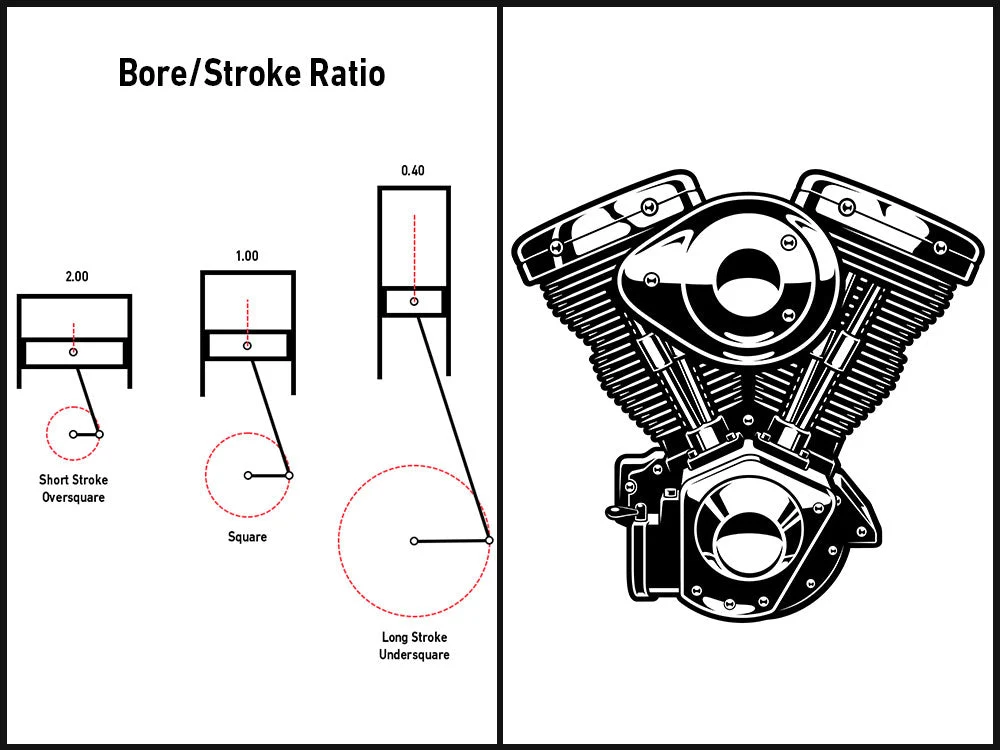
Oversquare vs Undersquare engines, with examples relevant to motorcycles and cars:
⚙️ Basic Concept
| Type | Bore vs Stroke | Key Characteristics | Typical Use |
|---|---|---|---|
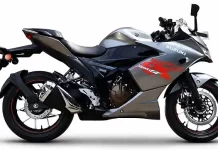
| Oversquare Engine | Bore > Stroke | Larger bore allows bigger valves → better airflow and higher RPM potential. Usually produces more power but less torque at low speeds. | Sports bikes, performance cars |
| Undersquare Engine | Bore < Stroke | Longer stroke increases piston travel → higher torque at lower RPM. Usually produces strong low-end torque but limited top-end power. | Cruisers, touring bikes, utility vehicles |
🔍 Examples
- Oversquare:
- Yamaha R15 V4 (Bore 58 mm, Stroke 58.7 mm — nearly square but tuned for high revs)
- KTM Duke 390 (Bore 89 mm, Stroke 60 mm) → rev-happy, high power output.
- Undersquare:
- Royal Enfield Classic 350 (Bore 72 mm, Stroke 85.8 mm) → strong low-end torque, relaxed cruising.
- Hero Splendor Plus (Bore 50 mm, Stroke 49.5 mm — slightly undersquare) → optimized for fuel efficiency and torque.
🧠 Quick Summary
- Oversquare = Power & RPM → ideal for sporty performance.
- Undersquare = Torque & Efficiency → ideal for comfort and load-bearing.
Would you like me to add a visual diagram showing piston movement differences between the two types? It’s a great way to illustrate how bore and stroke affect performance.