
































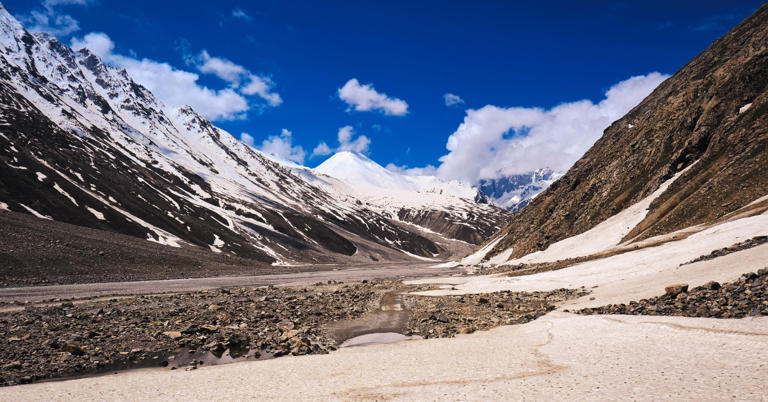
🌄 Importance of Mountain Passes in India
- Mountain passes are natural routes through rugged terrain, connecting valleys, states, and even neighboring countries.
- They have historically been vital for trade, travel, and cultural exchange, and today remain crucial for defense, logistics, and tourism.
- Many passes lie near international borders, making them strategically significant for the Indian Army.
- They also support local economies, scientific exploration, and adventure tourism.
🏔️ Five Highlighted Passes
- Khardung La (Ladakh)
- Altitude: ~5,359 m
- Among the world’s highest motorable passes.
- Connects Leh to Nubra Valley and serves as the main supply route to Siachen Glacier.
- Zoji La (Jammu & Kashmir)
- Altitude: ~3,528 m
- Links Kashmir Valley with Ladakh via the Srinagar–Leh Highway.
- Vital for military and civilian supplies; tunnel construction underway for year-round connectivity.
- Nathu La (Sikkim)
- Altitude: ~4,310 m
- Connects Sikkim with Tibet (China).
- Part of the ancient Silk Route, reopened for trade in 2006.
- Important for border patrols and diplomacy.
- Rohtang Pass (Himachal Pradesh)
- Altitude: ~3,978 m
- Connects Kullu Valley with Lahaul–Spiti.
- Historically closed half the year due to snow; Atal Tunnel (2020) now ensures all-season travel.
- Lipu Lekh Pass (Uttarakhand)
- Altitude: ~5,115 m
- At the trijunction of India, Nepal, and China.
- Route for Kailash Mansarovar Yatra and Indo-China trade.
- Strategically important for defense.
⚔️ Why They Matter
- Defense & Security: Key for troop movement and border surveillance.
- Trade & Connectivity: Enable commerce and cultural exchange across regions.
- Tourism & Adventure: Attract trekkers and travelers with scenic landscapes.
- Scientific & Environmental Value: Provide access to glaciers and fragile ecosystems.
- Emergency Relief: Serve as lifelines during natural disasters in remote areas.